JayzTwoCents’ latest video floats a startling range for the “dark GPU” problem: perhaps $200 billion to $300 billion or more of enterprise AI hardware sitting unused in warehouses. The video calls that figure a guess, and the Ed Zitron article it cites says only “$200 billion or more.” Neither number comes from an inventory audit.[1][5]
There is strong evidence that some very expensive Nvidia systems are waiting for power and data-center space. Business Insider’s reporting on Amazon internal emails provides the clearest example. Microsoft CEO Satya Nadella has described chips waiting for powered buildings, but he did not identify them as Nvidia hardware. Nobody has produced an industry-wide inventory count remotely close to $200 billion.[2][3]
This is a follow-up to HighVRAM’s earlier examination of Nvidia’s alleged channel stuffing. The extra reporting makes the infrastructure mismatch look more serious. It does not validate the biggest number in circulation.[9]
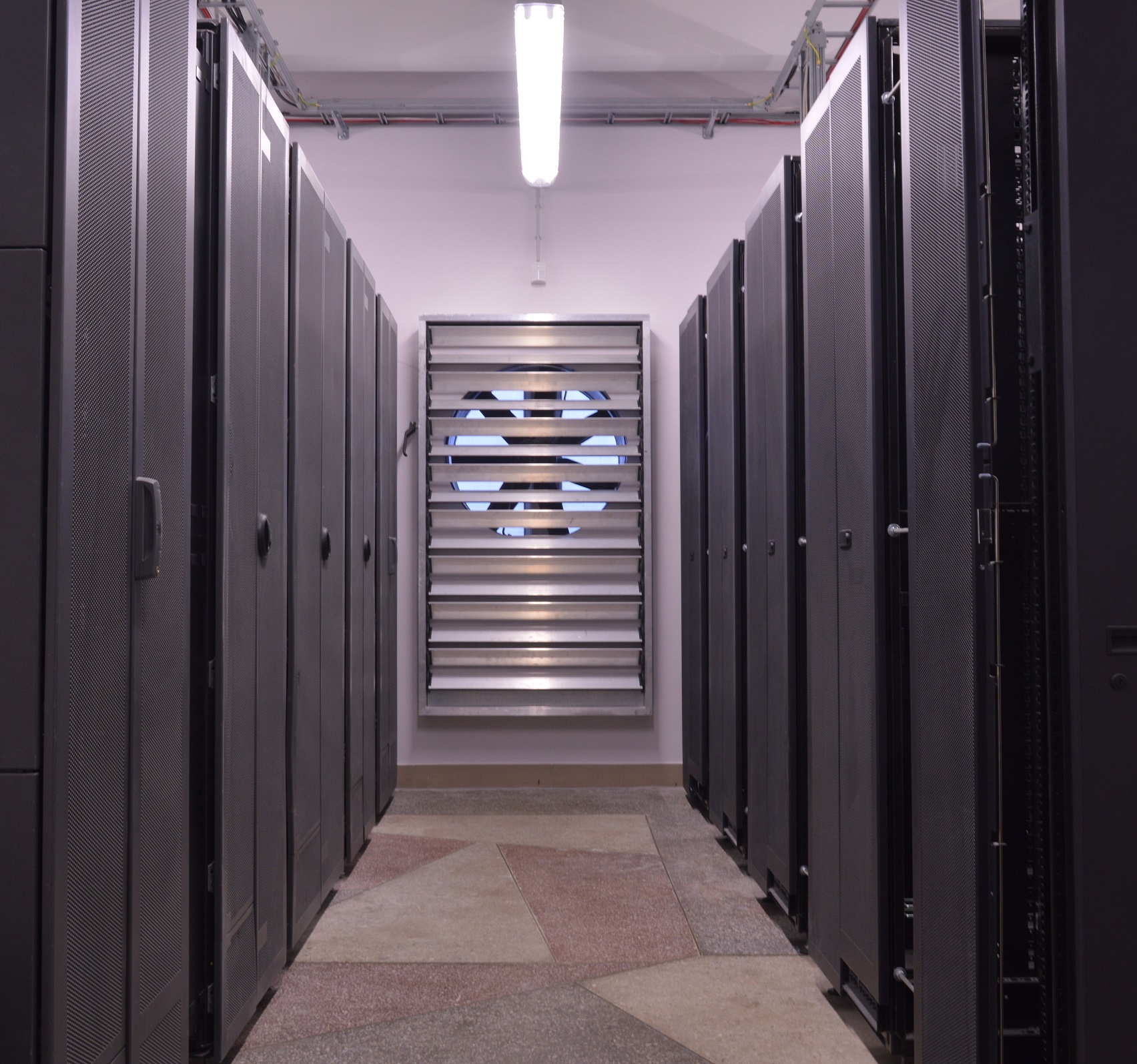
Illustrative data-center photo by Fleshas, Wikimedia Commons, shown unmodified and licensed under CC BY-SA 4.0.[7]

What we can document
Business Insider reported that AWS expected roughly $5 billion of Nvidia GB300 racks to reach US facilities in August, followed by about $3 billion each month “for the foreseeable future.” Some sites had physical room but insufficient electricity, so completed equipment was staged at intermediary warehouses. One AWS team lacked “a clear forecasted path” for installing its incoming racks at the time.[2]
Three billion dollars a month annualizes to $36 billion. That is an extraordinary flow of hardware. It is not the same as $36 billion sitting idle for a year: racks may move from staging to deployment, and the report says some sites were power constrained. Amazon also told Business Insider that staging finished equipment near deployment sites is normal and disputed the suggestion that AWS broadly lacked a deployment plan.[2]
Nadella supplies independent confirmation of the underlying problem. During an October 2025 BG2 podcast, he said Microsoft’s constraint was “power” and the ability to finish buildings near it. “You may actually have a bunch of chips sitting in inventory that I can’t plug in,” he said. “In fact, that is my problem today.” He did not identify the chips, provide a dollar value, or say they were unwanted.[3]
Reuters adds scale to the power shortage rather than the GPU inventory. Morgan Stanley estimated that US data-center developers face a 34% net power shortfall through 2028, equal to 32 gigawatts after allowing for on-site generation and fuel cells. The bank said delayed deployments could prompt customers to postpone deliveries or cancel component orders, although it did not expect Nvidia or Broadcom’s 2027 forecasts to be derailed.[4]
The power bottleneck has a transformer bottleneck
A data center cannot use electricity simply because generation exists somewhere on the grid. Transformers must change voltage as power moves through transmission lines, substations, distribution networks and the customer’s own electrical plant. Those machines are badly backlogged.
In February 2025, a National Electrical Manufacturers Association representative told Utility Dive that delivery of a transformer ordered that day could take as long as three years, compared with four to six weeks five years earlier. Wood Mackenzie put lead times for larger transformers at 80 to 120 weeks, while Hitachi Energy said transmission-scale units were taking three to six years.[11]
A second Utility Dive report put the averages at three years for high-voltage transformers and one year for distribution transformers, citing the American Public Power Association. It also reported that the US imports about 80% of high-voltage transformers and 40% to 50% of distribution units.[12]
Relief will not be immediate. Hitachi announced a $528 million Mississippi factory in September 2026 that should more than double its US capacity for small and medium power transformers, but production is not scheduled to begin until 2029.[13] The Energy Department says demand is being pushed by aging infrastructure, severe weather, reliability upgrades and electrification as well as new loads; its work with NREL projects transformer capacity requirements could rise 160% to 260% above 2021 levels by 2050.[14]
That does not prove a transformer shortage caused the specific AWS warehouse delays. Business Insider described an overall lack of power, not a bill of materials for each blocked site. But the transformer backlog shows why “just build more data centers” is not a quick answer: a company can secure GPUs, land and even a power agreement while still waiting years for the hardware that connects them.
That evidence supports a narrow conclusion: enterprise hardware can arrive before a customer has powered floor space for it. It does not tell us how many systems are delayed, how long they wait, or what share of the hardware already appears in a company’s construction-in-progress account.
Where $200 billion came from
The number traces back to analyst and newsletter writer Ed Zitron, not an inventory audit. Zitron writes that hyperscalers and GPU cloud companies have more than $374 billion in “construction in progress” assets and estimates that at least $200 billion consists of GPUs, primarily from Nvidia. JayzTwoCents expands that to “$200 billion to $300 billion or more” and describes the hardware as sitting unused in warehouses; the cited Zitron article does not provide that upper bound.[1][5]
Those are different claims. Construction in progress can include unfinished data centers and the infrastructure around them, while a staged rack may wait briefly before installation. Zitron’s calculation may eventually prove directionally right, but no disclosed asset list shows $200 billion of unused GPUs, and no independent source in this review reproduced his estimate. His figure works out to roughly 53% of the cited construction-in-progress total. That assumption needs evidence of its own.
A separate $3.5 trillion Gartner impairment figure repeated in the video concerns possible financial risk through 2030, not a present-day count of warehouse inventory; without accessible primary text, we do not use it to count idle GPUs.[1]
This distinction is worth defending because “unused GPU” can mean at least two things. A completed rack may be unpowered while it waits for a building. An installed cluster may be available but poorly utilized because networking, orchestration or workload scheduling is not ready. Business Insider uses “dark GPUs” for both situations. One is a construction delay; the other is an operating failure.[2]
The pipeline may be inflated before a GPU is ordered
There is another wrinkle. Bernstein Research analyzed thousands of proposed US data centers and concluded that only about 35% of the announced capacity is likely to become real, according to Business Insider. Some developers announce “bragawatt” projects without securing power, permits or customers. Others file multiple grid-connection requests for the same prospective project, creating “ghost” demand.[6]
That finding cuts both ways. It shows why power queues and project announcements cannot be treated as installed capacity. It also weakens any calculation that starts with the entire announced data-center pipeline and assumes a corresponding pile of purchased GPUs. A project that never obtains electricity may never order its racks.
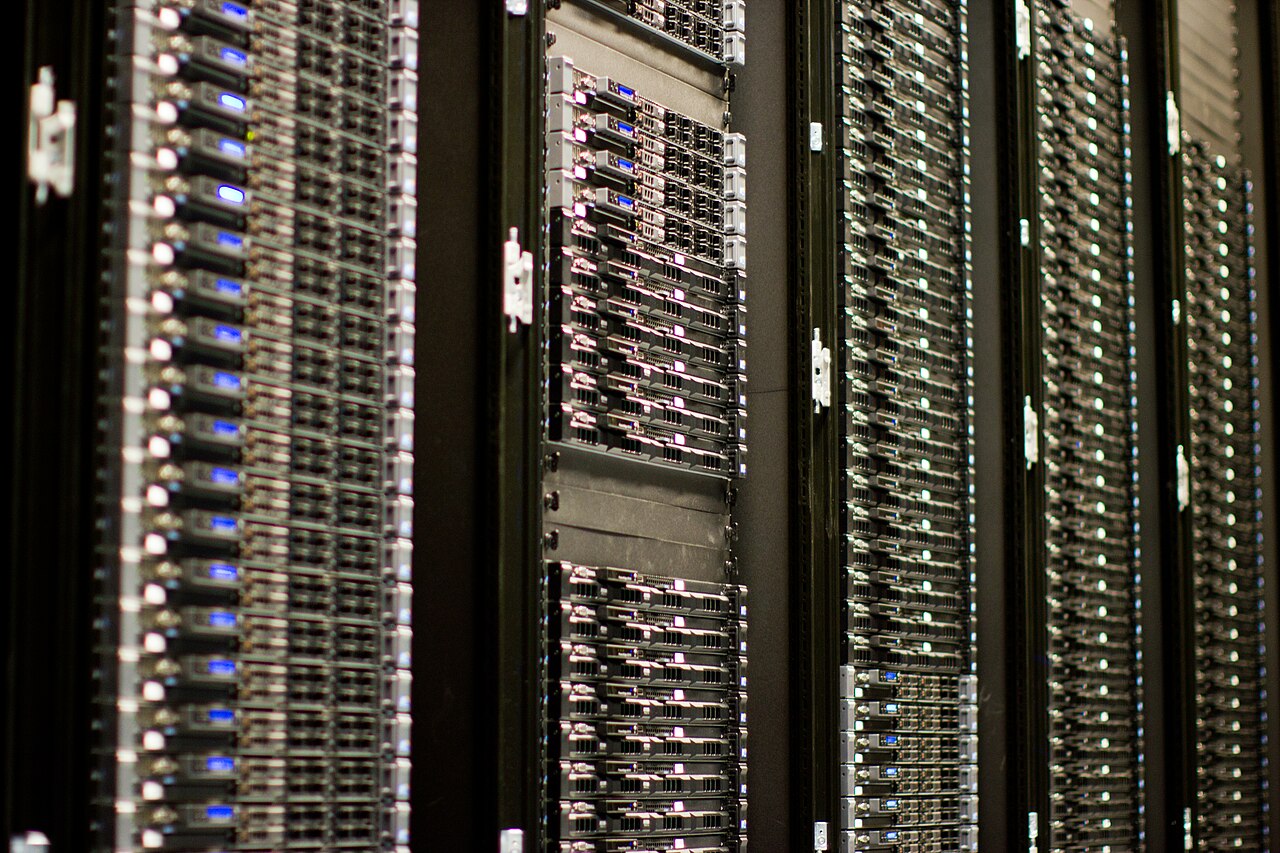
Illustrative server-room photo by Victor Grigas, Wikimedia Commons, shown unmodified and licensed under CC BY-SA 3.0.[8]

What this means for home AI
An enterprise glut would not turn neatly into cheap desktop cards. Nvidia’s GB300 NVL72 is a liquid-cooled rack containing 72 Blackwell Ultra GPUs and 36 Grace CPUs, tied together by NVLink and carrying 20TB of GPU memory. It needs the facility, networking and management software built around it. You cannot pull one board from a delayed rack and drop it into a home workstation.[10]
The direct route from dark enterprise racks to home-GPU prices is much narrower than the video suggests. GB300 systems use HBM and rack-scale packaging, while a GeForce card is a different product with different memory and boards. Nvidia can still favor higher-margin enterprise products when allocating engineering and manufacturing resources, but this reporting does not quantify how many consumer cards that choice displaced.
For local inference, a used 24GB RTX 3090 or 4090 can comfortably hold many 20B-to-30B models at four-bit quantization; a 30B model’s raw weights are about 14GiB before context and runtime overhead. A 70B model starts around 32.6GiB in raw four-bit weights and generally needs more than 40GB once overhead is included. Reaching that tier means a runtime that can split the model across multiple GPUs, with extra power, cooling and interconnect costs, or a unified-memory machine with enough memory reserved after the operating system takes its share.
The practical advice from the previous article holds: do not pay panic prices on the theory that every enterprise GPU sold removes one GeForce card from a shelf. Pick hardware around the model and runtime you will use. CUDA remains the easiest route for many Windows and Linux tools; Apple’s unified memory makes large models easier to fit but usually generates more slowly than a strong discrete GPU; AMD and Intel buyers should verify backend support in their exact application before spending.
Watch for evidence that converts the dark-GPU story from anecdotes into a market measurement: delivery cancellations, disclosed deployment delays, unusual inventory growth, falling enterprise rental prices and audited asset impairments. Amazon’s early-rack program and Nadella’s admission show that some hardware is waiting for powered space. They do not tell us that $200 billion of it is gathering dust.
Sources
- [1] JayzTwoCents: Real Signs the AI Bubble is about to burst?
- [2] Business Insider: Amazon is buying billions in Nvidia AI systems it cannot yet turn on
- [3] BG2 podcast transcript: Satya Nadella on power-bound chip inventory
- [4] Reuters: AI power crunch hits chip supply chain
- [5] Ed Zitron: AI Had Better Work Out
- [6] Business Insider: The AI data center boom has a ghost problem
- [7] Wikimedia Commons: Bacloud.com data center
- [8] Wikimedia Commons: Wikimedia Foundation servers
- [9] HighVRAM: Amazon has billions in Nvidia racks waiting for power
- [10] Nvidia: GB300 NVL72 specifications
- [11] Utility Dive: Transformer supply bottleneck threatens power system stability
- [12] Utility Dive: Transformer and breaker backlogs persist
- [13] Utility Dive: Hitachi to double US transformer production
- [14] US Department of Energy: R&D efforts to address transformer supply